Written by Tehreem for Near.biz. Last updated November 2026.
Tenant turnover is the process that starts when a tenant gives notice and ends when the next tenant moves in. In between sit the move-out inspection, repairs, cleaning, re-listing, screening and a new lease. The term also describes the tenant turnover rate, which is the share of tenants who leave in a given year.
A good turnover mostly comes down to order. Photos come before cleaning, repairs come before paint, and paint comes before the final clean. Get the sequence right and the hands-on work often fits into about a week. Get it wrong and you pay for the same room twice while the unit sits empty.
How long does tenant turnover take? A standard turn runs about 20 to 33 days from move-out to the next tenant’s move-in, and the hands-on work takes 5 to 10 of those days, according to one property-management software vendor. On a $3,500 rental, every empty day costs about $117 in lost rent.
This guide gives you a day-by-day checklist, real costs for San Jose and Palo Alto, the California deposit rules that set your deadlines, and a section for landlords who run a turn from far away. If you own a rental you do not live near, our full guide to rental property maintenance for out-of-town landlords covers the wider picture.
In This Guide
- What Tenant Turnover Means for Landlords
- The Tenant Turnover Checklist at a Glance
- Before Move-Out: Days -30 to -1
- Move-Out Day: Day 0
- Days 1 to 2: Scope the Work
- Days 2 to 6: Run the Trades in the Right Order
- Days 6 to 8: Final Clean, After Photos and Lock Check
- Days 8 to 21: Deposit, Screening and Move-In
- How Long Does Tenant Turnover Take?
- What Tenant Turnover Costs Landlords
- How to Calculate Tenant Turnover Rate
- Managing Rental Turnover From Far Away
- California Rules That Set Your Turnover Deadlines
- Tenant Turnover FAQ
What Tenant Turnover Means for Landlords
Landlords use the phrase in two ways, and it helps to keep them apart. The first is the process: the work that turns an empty unit back into a rentable one. This is what most people mean by rental turnover, and it is what the checklist below covers. The second is the tenant turnover rate, a percentage that shows how often your tenants leave. It has its own section further down.
Rental property turnover is rarely quick or free. Every move-out brings a stretch of lost rent, the cost of repairs and cleaning, and the time it takes to find and screen the next tenant. You may also see the same thing called tenant churn or tenant rollover. The meaning is the same: a tenant leaves and you have to replace them.
For a landlord who lives close by, a turn is a busy week. For a landlord in another city or state, it is also a coordination problem, because nobody working for you is standing in the unit. That is why the checklist below says who does what and in which order.
The Tenant Turnover Checklist at a Glance
Here is the whole timeline in one table. Day 0 is the day the tenant hands back the keys. The sections after the table explain each step.
| When | Phase | Key tasks |
|---|---|---|
| Day -30 to -14 | Plan | Confirm the move-out date in writing, get a forwarding address, offer a pre-move-out inspection, book vendors, start listing prep |
| Day -14 to -1 | Prepare | Pre-move-out inspection if requested, marketing photos, showings with 24-hour written notice |
| Day 0 | Move-out | Collect keys, photograph the unit before any cleaning or repairs, walk through every room, note meter readings |
| Day 1 to 2 | Scope | Separate damage from wear, build the repair list, get quotes, order the rekey, test detectors |
| Day 2 to 6 | Trades | Trash-out, safety and mechanical repairs, drywall, paint, flooring |
| Day 6 to 8 | Finish | Final clean, carpets, after photos, test the new keys |
| Day 8 to 21 | Close out | Deposit statement due by day 21, screening, lease signing, move-in photos |
Every unit is different. A light turn with a few paint touch-ups may wrap up in four days, and a unit that needs new flooring can take three weeks. The order stays the same either way.
Before Move-Out: Days -30 to -1
The cheapest days in a turn are the ones before the tenant leaves, because you can book work and start marketing while the unit is still occupied.
- Confirm the move-out date in writing. Ask for the date, a forwarding address for the deposit, and where to return keys, fobs and garage openers. In California the 21-day deposit deadline starts when the tenant leaves, so you want that date on paper.
- Offer the pre-move-out inspection. California landlords must tell tenants in writing that they can ask for an initial inspection. It can happen no earlier than two weeks before the tenancy ends, with at least 48 hours’ written notice. The point is to let the tenant fix small problems, like a dirty oven or a scuffed wall, before they leave.
- Book your vendors now. Cleaners, painters, carpet cleaners and handymen all have lead times, and the major turnover guides recommend scheduling them before the tenant is gone. Give each one the likely start date and ask what they need to see first.
- Start marketing. Many landlords post the listing as soon as notice is in. Entering the unit for photos or showings needs written notice, and 24 hours is presumed reasonable in California.
- Review the repair history. Pull up everything that came up during the lease, including any maintenance requests from far away that were patched instead of fixed. A slow drain or a noisy HVAC unit is likely to turn up on your repair list.
Move-Out Day: Day 0
On move-out day, your goal is a complete record of the unit before anyone cleans or repairs anything.
- Collect everything that opens a door. Keys, fobs, garage openers and mailbox keys. Write down the date and time the tenant returned possession.
- Take photos or a timestamped video first. Since April 1, 2025, California landlords have to photograph the unit after the tenant leaves and before repairs or cleaning, then again after the work is done. For tenancies that began on or after July 1, 2025, photos are also required at move-in. They go out with the deposit statement. The chaptered text of AB 2801 has the exact wording.
- Walk every room with the same checklist each time. The list below is a starting point.
- Record meter readings and confirm the tenant has closed or transferred utilities.
- Do not throw away belongings. Items left behind fall under California’s abandoned property rules, which have their own notice steps. Check them before you clear anything out.
A room-by-room walkthrough list:
- Walls and ceilings: holes, stains, water marks, unapproved paint colors
- Floors and carpet: stains, burns, pet damage, warped boards
- Kitchen: inside the fridge and oven, dishwasher, sink and under-sink leaks, cabinets
- Bathrooms: tub and toilet caulking, grout, exhaust fan, slow drains
- Windows and doors: locks, screens, blinds, seals
- Safety: smoke alarms and carbon monoxide detectors
- Mechanical: HVAC filter, water heater, thermostat
- Outside: garage, yard, gutters, trash area
For a longer list of what to inspect across the year, see our rental property maintenance checklist.
Days 1 to 2: Scope the Work
With the photos done, walk the unit again with a notepad and sort every issue into one of two groups: ordinary wear and tear, or damage. The split matters because California law does not let you charge a tenant for ordinary wear and tear or for damage that was already there. Cleaning charges are limited to returning the unit to the level of cleanliness it had at move-in.
| Usually wear and tear (your cost) | Usually damage (may be deducted) |
|---|---|
| Faded or lightly scuffed paint | Large holes in drywall, unapproved paint colors |
| Carpet worn flat in walkways | Pet stains or burns in carpet |
| Loose handles and minor hinge wear | Broken doors, blinds or windows |
| Normal dust and light grime | Heavy grease, trash or filth left behind |
These are common examples, not legal tests. A tenant who lived there for five years should leave more wear behind than one who stayed five months, so judge each item on its age and condition.
Then build the work plan:
- Write one repair list in the order the work will happen, with photos attached, and send it to every vendor. This is the core of rental turnover and repair coordination: one list, one order, one person responsible for it.
- Check the systems that fail quietly. Look under sinks and around the water heater for leaks (our post on common plumbing issues shows what to watch for), run the fridge and oven, and replace the HVAC filter. A fridge that is not cooling is far easier to deal with before a new tenant moves in.
- Test every smoke alarm and carbon monoxide detector. California requires working alarms at the start of a tenancy.
- Rekey the locks. Change or rekey between every tenant. California requires a working deadbolt on main entry doors and locks on windows designed to open.
- Order slow items now. Flooring, appliances and special paint can take longer to arrive than the rest of the turn takes to finish.
Days 2 to 6: Run the Trades in the Right Order
Most delays and double payments in a turn come from trades arriving in the wrong order. The sequence below matches what the major turnover guides recommend.
- Trash-out. Remove anything left in the unit, including junk in the garage or yard.
- Safety and mechanical fixes. Detectors, locks, leaks, HVAC and appliances.
- Drywall and carpentry. Patch holes, fix doors and trim.
- Paint. Touch-ups or a full repaint, depending on condition. For scuffs in up to three rooms, paint touch-ups can be booked on near.biz. A full repaint needs a painting contractor.
- Flooring. Repair or replace.
A common mistake is booking the cleaner first. Drywall dust, paint and foot traffic from other trades undo the cleaning, and you end up paying for it twice. If two trades can work at the same time without getting in each other’s way, such as a handyman fixing doors while a locksmith rekeys, let them.

Days 6 to 8: Final Clean, After Photos and Lock Check
- Deep clean the unit top to bottom. Cabinets inside and out, appliances, bathrooms, windows and floors. Our post on move-out cleaning explains what a thorough clean should cover.
- Clean the carpets last, once every other trade is out of the unit. Near.biz lists carpet cleaning that you can book by rental address.
- Take the second set of photos. California expects photos after repairs and cleaning, as well as before.
- Test the new keys on every lock, then replace bulbs, the HVAC filter and any detector batteries.
- Do a final walkthrough with the same checklist you used on day 0.
Days 8 to 21: Deposit, Screening and Move-In
In this stretch you close out the old tenancy and open the new one at the same time.
Close out the old tenant
- Send the deposit statement within 21 days. California requires you to return the deposit, or the balance after deductions, with an itemized statement within 21 calendar days after the tenant leaves. Deductions over $125 need receipts or invoices. If the work is not finished by then, you can deduct a good-faith estimate and send the receipts within 14 days. Attach the photos.
- Be accurate before you are fast. A landlord who keeps a deposit in bad faith can owe a penalty of up to twice the deposit, on top of actual damages.
Open the new tenancy
- Screen every applicant with the same written criteria, which helps you stay within fair housing law.
- Check the deposit cap. Since July 1, 2024, California limits a new tenant’s deposit to one month’s rent. Individual landlords who own no more than two properties with four units in total can still ask for two months, and service members are an exception. Brownstein Hyatt’s summary explains the details.
- Give the required disclosures. For homes built before 1978 that includes the federal lead paint pamphlet and disclosure form. The EPA lists the steps.
- Do the move-in inspection and photos together with the new tenant, and hand over the keys after the funds have cleared.
How Long Does Tenant Turnover Take?
Tenant turnover usually takes 20 to 33 days from the day a tenant moves out to the day the next one moves in, with 5 to 10 days of actual work. Light turns finish sooner, and units that need major repairs can sit empty for more than a month.
| Type of turn | Hands-on make-ready | Total days vacant |
|---|---|---|
| Light (clean, touch-ups) | 3 to 5 days | 11 to 20 days |
| Standard (paint, some repairs) | 5 to 10 days | 20 to 33 days |
| Heavy (flooring, major repairs) | 10 to 21 days | 26 to 54 days |
The table comes from LeaseRunner’s turnover guide, a vendor blog, so read it as a rough benchmark. For comparison, RealPage reported an average of 34.4 vacant days for stabilized apartments at the end of 2024, and the National Apartment Association’s common guideline for turning a unit is about 7 working days.
The work itself is often the shorter part. The longer part is the gap between finishing the unit and signing the next lease. That is why booking vendors and starting the listing before move-out saves more time than any single repair does.
What Tenant Turnover Costs Landlords
The cost of tenant turnover for a landlord is the rent lost while the unit sits empty, plus repairs, cleaning and re-listing. The National Apartment Association’s survey of apartment operators put the average at about $1,800 per move-out. For a San Jose rental, lost rent alone can pass $1,000 in a 10-day gap.
That $1,800 figure comes from large apartment operators and an older survey, and we could not find a reliable published average for single-family rentals or small buildings. A Multi-Housing News report on NAA data says 53.8 percent of firms spend $1,500 to $3,500 per turn. Use these as a ceiling check, then run the numbers for your own unit.
Lost Rent: A Worked Example
Assume a San Jose two-bedroom that rents for $3,500 a month. Rent trackers put San Jose two-bedrooms in the $3,200 to $3,600 range. Divide the rent by 30 and one empty day costs about $117.
| Length of the turn | Rent lost |
|---|---|
| 10 days | $1,167 |
| 21 days | $2,450 |
| 25 days | $2,917 |
Add the make-ready work. If repairs, paint and cleaning come to $2,000 (an assumption for this example), a 25-day turn costs about $4,917 in total. In Palo Alto the same math is steeper: a two-bedroom averaging about $4,290 a month loses roughly $1,001 per extra week, and a three-bedroom house at about $7,109 loses roughly $1,659 per week, based on Rentometer’s Palo Alto data.
Typical Prices for Turnover Work
These are published averages for the San Jose area where we could find them. National figures are marked, because we could not find reliable local averages for those jobs. They are not near.biz quotes.
| Job | Area | Typical price | Source |
|---|---|---|---|
| Interior painting | San Jose | $602 to $2,489 | Thumbtack, May 2026 |
| Carpet cleaning | San Jose | $148 to $301 | Thumbtack, Apr 2026 |
| Regular house cleaning (not move-out) | San Jose | $181 to $325 | Thumbtack, Apr 2026 |
| Move-out cleaner, hourly labor | San Jose | $27.55 to $29.77 per hour | Care.com, Nov 2026 |
| Move-out cleaning, 2 bedroom | National | $140 to $210 | HomeAdvisor, 2025 |
| Handyman | Bay Area | About $65 per hour | Taskrabbit, Nov 2026 |
| Junk removal | San Jose | About $150 average | Thumbtack |
| Rekey a lock | National | $18 to $25 per lock, plus a $30 to $150 service call | Thumbtack, Oct 2026 |
| Drywall repair | National | $294 to $920 | Thumbtack, Apr 2026 |
| Appliance repair | National | $129 to $329 | Thumbtack, Mar 2026 |
| HVAC inspection | National | About $300 | Angi, 2026 |
How to Calculate Tenant Turnover Rate
To calculate tenant turnover rate, divide the number of tenants who moved out during a period by the number of units you manage, then multiply by 100. If 4 of your 12 units changed tenants in a year, your tenant turnover rate is 33 percent.
Tenant turnover rate = (move-outs in the period ÷ total units) × 100
A few notes keep the number useful:
- Use the same period and the same unit count every time. Most landlords measure over 12 months and divide by the units they had at the start of the year.
- If you own one or two units, the rate jumps around. One move-out in a single-unit portfolio is a 100 percent rate. In that case, track how many years each tenant stays instead.
- Compare against your own history first. The National Apartment Association’s turnover survey put the average for large apartment communities at about 47 percent (NAA survey). That is the average tenant turnover rate for big buildings. We could not find a reliable published average for single-family rentals or small buildings, so your own year-over-year trend is the better benchmark.
If your rental turnover rate is rising, look at three things before you blame the market: how fast repairs get done, how rent increases are communicated, and what condition the unit is in. These are practical suggestions, not measured results, but each one is within a landlord’s control.
Managing Rental Turnover From Far Away
If you live far from your rental, rental property turnover costs more, because every delay is a day you cannot fix by driving over. The goal is to replace your presence with systems that produce proof.
- Name one person on the ground. That can be a property manager, a reliable handyman or a local contact. If you are weighing a manager, our post on what makes a property manager efficient lists what to look for.
- Use video as your eyes. Ask for a timestamped walkthrough at move-out and again after the work. Ask every vendor for before-and-after photos with the invoice.
- Keep two vendors per trade. One remote-landlord guide from Pickspace suggests a backup for each category, photo proof on larger invoices, and paying for an independent inspection ($75 to $150 each) on bigger jobs.
- Control access without being there. Use a lockbox or smart lock with codes that expire, and delete them when the job ends.
- Pay against photos. Release the final payment after you have seen the finished work, not before.
- Keep one shared list. Rental turnover and repair coordination fails when the cleaner, painter and locksmith each work from a different message thread. One list, in order, with dates.
Near.biz is built for this situation. Start from the landlord services page, enter the rental address, and you see an estimated scope and price before you approve anything. You can adjust the scope. The platform covers cleaning, plumbing, HVAC, electrical, appliance repair and gardening, plus tenant turnover and move-out cleaning. Near.biz checks each provider’s identity and, where the work legally requires it, their business license and insurance. Those checks do not guarantee the quality of the work, so keep asking for photos. Details are on the Trust and Safety page.
California Rules That Set Your Turnover Deadlines
These rules decide how long you have to finish the paperwork, so they shape the schedule above. This is general information, not legal advice.
| Rule | What it says | Source |
|---|---|---|
| Deposit return | Return the deposit, or the balance after deductions, with an itemized statement within 21 calendar days after the tenant leaves | Civil Code 1950.5 |
| Receipts | Needed for deductions over $125. If work is not finished, deduct a good-faith estimate and send receipts within 14 days | Civil Code 1950.5 |
| Pre-move-out inspection | Tell the tenant in writing they can request one. Held no earlier than two weeks before the tenancy ends, with 48 hours’ written notice | Civil Code 1950.5 |
| Photos (AB 2801) | Move-out photos before and after repairs and cleaning since April 1, 2025. Move-in photos for tenancies beginning on or after July 1, 2025 | AB 2801 text |
| Deposit cap | One month’s rent since July 1, 2024, with a two-month option for small individual landlords | Brownstein Hyatt |
| Entry | Written notice. 24 hours is presumed reasonable | Civil Code 1954 |
| Locks | Working deadbolt on main entry doors and locks on windows designed to open | Civil Code 1941.3 |
| Smoke and CO alarms | Working alarms at the start of a tenancy | H&S Code 13113.7 and 17926.1 |
| Lead paint | Homes built before 1978 need the EPA pamphlet and a disclosure form | EPA |
San Jose: The Apartment Rent Ordinance caps increases at 5 percent per 12 months for buildings with three or more units built before September 1979, and owners must keep the Rent Registry updated. The Tenant Protection Ordinance requires just cause to end a tenancy, mainly in buildings with three or more units. The city’s rental rights page has the current details.
Palo Alto: The city’s tenant guide describes no local rent control, so state law, including AB 1482, applies.
Laws and local rules change. Before you rely on a date or a dollar limit, confirm the current text on the California Legislature’s website or ask a California landlord-tenant attorney.
Tenant Turnover FAQ
What is tenant turnover?
Tenant turnover is the process of replacing one tenant with another, from the day notice is given to the day the new tenant moves in. It includes the move-out inspection, repairs, cleaning, listing, screening and a new lease. Landlords also use the term for the tenant turnover rate, the percentage of tenants who leave in a year.
How long does tenant turnover take?
A standard tenant turnover takes 20 to 33 days from move-out to the next move-in, with 5 to 10 days of hands-on work. A light turn can finish in 11 to 20 days. A heavy turn with flooring or major repairs can take 26 to 54 days.
How much does tenant turnover cost a landlord?
Tenant turnover costs a landlord lost rent plus repairs and cleaning. Surveys of apartment operators put the average near $1,800 per move-out, and most firms report $1,500 to $3,500. A $3,500 San Jose rental loses about $117 per empty day, so a 25-day turn costs about $2,917 in rent before any repairs.
How do you calculate tenant turnover rate?
Divide the number of tenants who moved out during a period by the total number of units, then multiply by 100. If 4 of your 12 units changed tenants this year, your rate is 33 percent. Use the same period and unit count every year so the results can be compared.
What is the average tenant turnover rate?
The National Apartment Association’s survey of large apartment communities put the average at about 47 percent. We could not find a reliable published average for single-family rentals or small buildings, so your own year-over-year numbers are the better benchmark.
How long does a landlord have to return a security deposit in California?
California landlords have 21 calendar days after the tenant moves out to return the deposit or send an itemized statement of deductions. Deductions over $125 need receipts, and the required before-and-after photos go with the statement. Confirm the current rules before you rely on a deadline.
Should I change the locks between tenants?
Yes. Rekey or change the locks after every move-out, because a former tenant may still have keys or copies. California also requires working deadbolts on main entry doors and window locks. National Thumbtack figures put rekeying at about $18 to $25 per lock plus a service call.
Next Step: Book the Work for Your Turnover
A turnover goes faster when the cleaner, the carpet cleaner and the repair pros are booked before the tenant leaves. Enter your rental address on near.biz to see the estimated scope and price before you approve anything.
About the Author
Tehreem is a content strategist and SEO writer who writes landlord guides for Near.biz.
Visuals
Visual 3 (order of work) is finished and shown in the article above in two sizes: landscape for desktop and vertical for mobile, in the near.biz green and gold with the Montserrat font. Upload both files in WordPress and show each on its own screen size. Visuals 1, 2 and 4 are still editable Canva designs in the earlier navy and teal colors: open each link, then use Share and Download as PNG. I could not download them into this chat.
| # | Visual | Goes after | Canva link | Alt text |
|---|---|---|---|---|
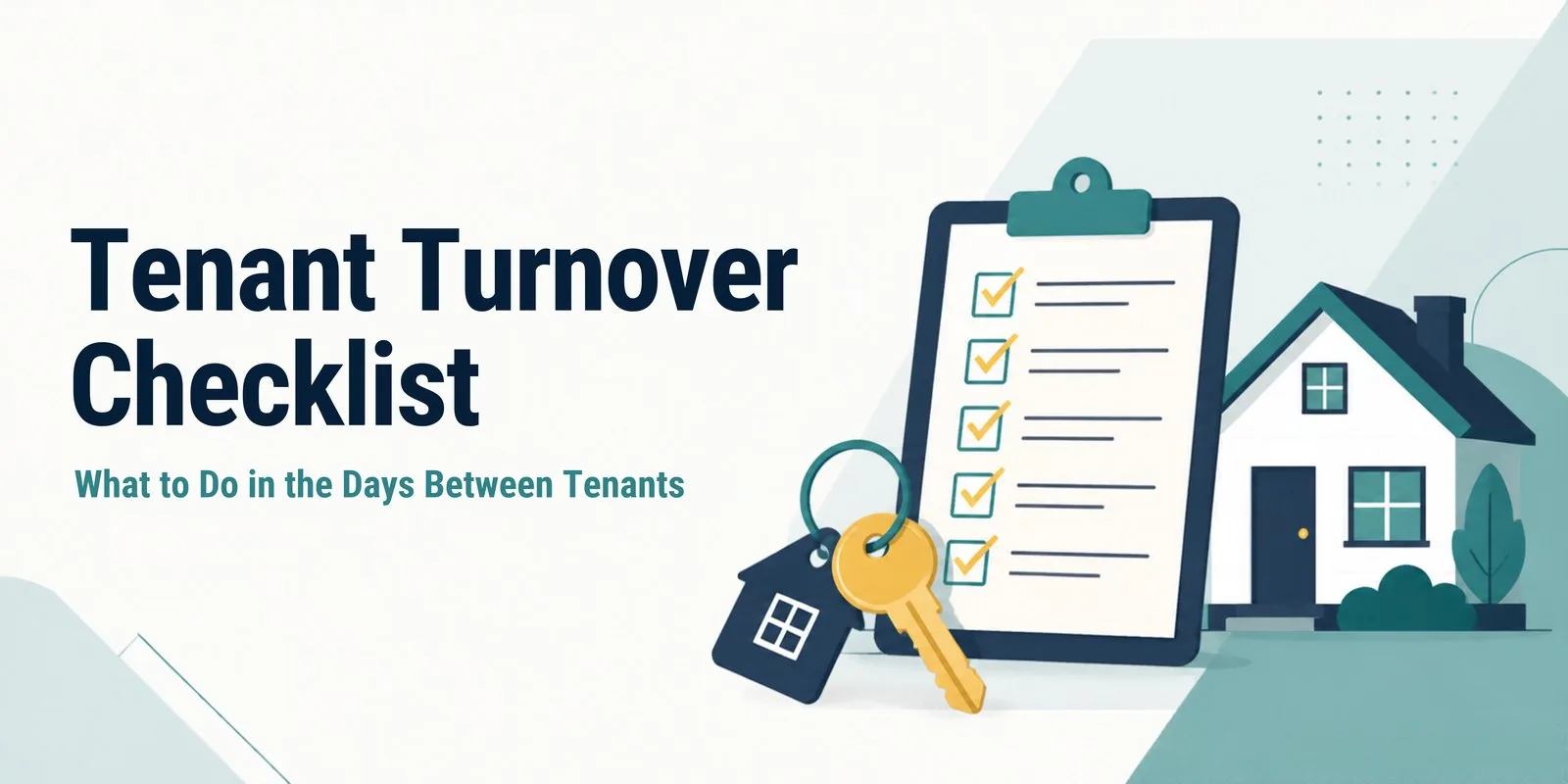
| 1 | Hero banner | The “In This Guide” intro paragraph (featured image) | Open in Canva | Clipboard with a checked list, a house key and a small house, titled Tenant Turnover Checklist |
| 2 | Tenant Turnover Timeline: Day by Day | The checklist table in “The Tenant Turnover Checklist at a Glance” | Open in Canva | Seven-step timeline from day -30 to day 21 showing plan, prepare, move-out, scope, trades, finish and close out |
| 3 | The Right Order for Turnover Work | End of “Days 6 to 8” | Open in Canva | Eight-step list showing photos first, then trash-out, repairs, drywall, paint, flooring, deep clean and carpets last |
| 4 | What One Turnover Can Cost | End of the “Typical Prices for Turnover Work” table | Open in Canva | Bar chart of rent lost over 10, 21 and 25 days on a $3,500 rental, with a $4,917 total for a 25-day turn |
Suggested file names: tenant-turnover-checklist-hero.png, tenant-turnover-timeline.png, turnover-order-of-work.png, tenant-turnover-cost-example.png.
Research Notes and Checks
Read this before publishing. Several figures are labeled in the article, but three limits matter most: the California statute pages and Google results could not be opened directly, most prices are from Thumbtack-type cost pages, and the turnover timelines come from a vendor blog.
What Makes This Article Different From the Top Results
| Gap in current top pages (15 pages reviewed) | How this article fills it |
|---|---|
| No true day-by-day timeline | Day -30 to day 21 table plus a timeline graphic |
| Cost tables say “varies” or give unsourced ranges | Line-item table with named sources and dates, plus a worked lost-rent example |
| Nothing on California rules | Deadline table (deposit, photos, cap, entry, locks, alarms) and San Jose and Palo Alto notes |
| Nothing for remote landlords | A full section on managing a turn from far away |
| Rate formula is inconsistent | One formula, a worked example and a note on small portfolios |
| Vendor sequencing is generic | A reasoned order of trades and a graphic |
Facts to Confirm Before Publishing
- California statutes. The official legislature pages would not load, so the statute text came from AB 2801’s chaptered text on LegiScan and public mirrors of the codes. Have someone confirm the 21-day deadline, the $125 receipt rule, the 14-day estimate rule and the photo dates on the legislature’s own site.
- AB 2801 move-in photos. One city page gives April 1 and the statute text gives July 1, 2025 for tenancies beginning on or after that date. The article uses July 1.
- Deposit cap. The one-month cap and the small-landlord exception come from law-firm summaries (Brownstein Hyatt and others), not the statute page.
- Turnover timeline. The light, standard and heavy ranges come from LeaseRunner, a software vendor’s blog. RealPage’s 34.4 vacant days is for large apartments.
- Turnover rate and cost benchmarks. The 46.8 percent rate and the $1,800 cost come from the National Apartment Association’s older survey of large apartment operators. No reliable figure was found for single-family or small rentals, and the article says so.
- Prices. San Jose figures are from Thumbtack (painting, carpet cleaning, house cleaning, junk removal) and Care.com. Rekey, drywall, appliance and HVAC figures are national. No Palo Alto prices were found.
- Worked example. The $3,500 rent, the $2,000 make-ready cost and the 4 of 12 units example are assumptions, and the article labels them as such. The rent comes from published San Jose averages of $3,200 to $3,600.
- Not covered. Local San Jose rules for single-family homes and duplexes, the abandoned property procedure, and the 2026 screening fee cap were not researched. The article only tells readers to check the abandoned property rules.
Near.biz Claims and Link Choices
- Only what the live pages show is claimed: booking from a rental address, an estimated scope and price before approval, adjustable scope, and the service categories listed on the landlord page.
- The article does not say “vetted”, “background-checked” or “guaranteed”. The Trust and Safety page says identity checks do not guarantee work quality, and the article repeats that.
- Not linked: the plural landlord URL (it appears to redirect to the singular one) and the move-out cleaning product page (it showed homepage content, so it needs a check in a browser). Rekey, junk removal and pest control are not promised, because the site’s own pages disagree on whether they exist.
- Carpet cleaning and paint touch-ups are linked because their product pages were verified. The article notes touch-ups cover small scuffs only.
Site Fixes This Article Depends On
- Redirect the plural landlord URL to the singular one and update the guide’s links, so the CTA and the nav point to one page.
- Add this post to the sitemap after publishing. The sitemap currently leaves out the guide, the requests post, the checklist post and the landlord page.
- In the guide’s “Tenant Turnover: Cleaning, Inspection and Repairs” section, add a link to this post, for example: “See our full tenant turnover checklist.” This keeps the two pages from competing.
- The three cluster posts have an H1 that differs from the title tag. Make sure this post’s title tag and H1 are set as in the On-Page Package.
After Publishing
- Submit the URL in Search Console on publish day.
- Check indexing after 3 to 5 days.
- Re-export the Performance report for this page around Nov 24 and again at the end of December. Look at the queries “tenant turnover”, “tenant turnover checklist”, “tenant turnover rate” and “rental turnover”.
- Expect slow movement at first. The site’s Authority Score is 2, so backlinks to this post (landlord groups, Bay Area real estate sites) will matter as much as the writing.
Main Sources
- LeaseRunner turnover guide, Buildium, Avail and Hemlane for the order of work
- NAA apartment turnover survey, Multi-Housing News and RealPage for rate, cost and vacancy
- AB 2801 text, Civil Code 1950.5, Brownstein Hyatt on deposit limits for California rules
- San Jose rental rights and the Palo Alto tenant guide for local rules
- Thumbtack, Care.com, HomeAdvisor, Taskrabbit, Angi and Rentometer pages linked in the article’s price and rent tables